


FDU-Vancouver Hosts Visiting Speakers

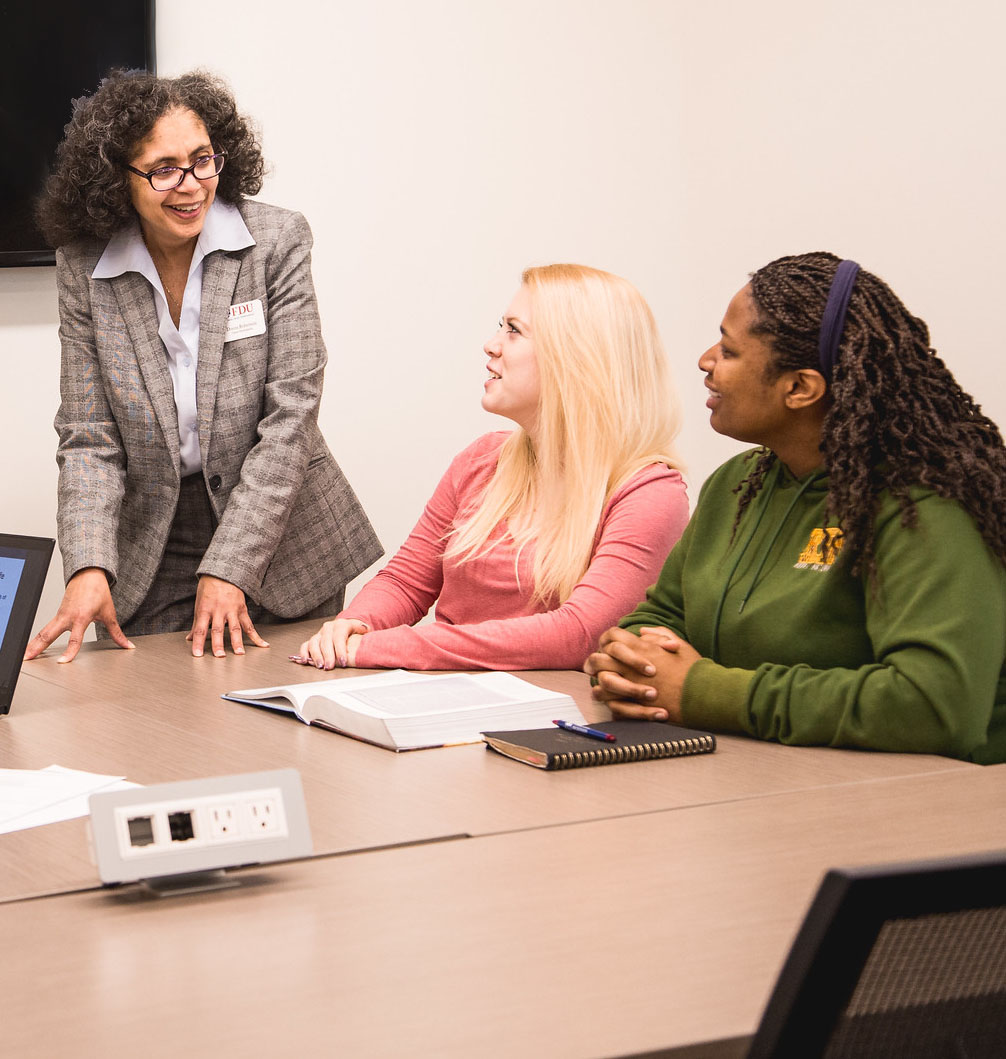
FDU-Vancouver students, faculty and staff were joined on March 25 by three colleagues from neighboring universities to discuss the development of digital humanities.

Ray Siemens, Canadian research chair in humanities computing at the University of Victoria, British Columbia, Canada, opened the discussion. This was a week after his “Implementing the New Knowledge Environment” project (INKE) won $2.5 million in support through the Social Sciences and Humanities Research Council Major Collaborative Research Initiative program, with an additional $10.4 million funding in institutional and research partner support.

Digital humanities, also known as humanities computing, is a field of study, research, teaching and invention concerned with the intersection of computing and the disciplines of the humanities. It is methodological by nature and interdisciplinary in scope.

Siemens discussed general trends in the development of digital humanities, its increasing demands on university infrastructures and its collaborative emphasis in the arts. He also emphasized the risks of technological speculation and the practical contributions technology has made to humanistic research and pedagogy in the past decade. His talk focused on recent developments in reading-related technology, rich textual encoding, basic notions of digital humanities and likely near-future developments.

Siemens was joined by one of his principal co-investigators in the INKE project, Teresa Dobson, an associate professor from the University of British Columbia. Dobson guided students and faculty through developments in e-literature, ranging from theoretical notions of embodied metaphor and basic literacy development through to literary readings of electronic works, such as the poignant flash poem “Girls’ Day Out,” by Kerry Lawrynovicz, which combines text and visual design to represent the Calder Drive murders near Houston, Tex. (http://collection.eliterature.org/1/works/lawrynovicz__girls_day_out.html)

Kirsten Uszkalo, from Simon Fraser University, Burnaby, British Columbia, Canada, joined Siemens and Dobson to discuss text-analysis tools, such as those she uses in her literary work on early modern representations of witches and witchcraft and women’s history. She demonstrated how students may draw on Twitter or SMS for textual communication (sometimes even during a visiting lecture ...) while more enriched uses could continue to textual encoding and analysis. Uszkalo’s talk emphasized the value of digitization and digital tools in enhancing reading activities as well as providing complex interpretive opportunities.

For FDU-Vancouver, such visiting speakers are the first among several initiatives to build a closer collegial and collaborative working relationship with its neighbor institutions in British Columbia. Future events and projects will aim to interact with the New Jersey campuses as well, for example through interactive television (ITV).

April/May 2009

In This Issue

View text only for this complete issue.

Flor = College at Florham,
Madison, N.J.

Metro = Metropolitan Campus,
Teaneck, N.J.

Information Deadlines

The deadline for the September issue of Inside FDU on the Web is August 28.

Copy received after deadline will be included in the following issue. Every effort will be made to deal with late-breaking stories. Send information to: Carol Black, Publications, at H-DH3-14, fax to 201-692-7039 or e-mail to black@fdu.edu.


Inside FDU on the Web is published by the Office of Communications and Marketing. Newsletter Staff: Carol Black, editor; Mary Ann Bautista, Bill Blanchard, Angelo Carfagna, Scott Giglio, Howard Gilman, Gretchen Johnson, William Kennedy, Dan Landau, Lillian Lukac, Rebecca Maxon, Melissa Payton, Art Petrosemolo, Jason Scorza, Shweta Kulkarni Van Biesen, Kevin Wisch.

Index of back issues


[090427]